Swimming in DOSE: rivers, the open sea and how far is too far
An island full of water meant survivors had to swim. Here's how swimming works, what you can and can't do in the water, and why heading for the horizon is a mistake.
Once the world became an island with real coasts, lakes and rivers, we had to answer a question we'd been putting off for months: what happens when a survivor walks into the water and keeps going?
Before this week the honest answer was "nothing good". Deep water was a wall. You'd walk up to the edge of a river and stop, which is fine for a ditch and very strange for a lake you can see the other side of. So survivors can swim now. This post covers how it works, what you can still do while you're in the water, and the parts that will get you killed.
Wading in and swimming
Water up to your knees or your waist you simply wade through, and you keep fighting as normal. Once the water gets to about 1.3 metres deep, your survivor starts swimming.
Swimming works in any water that's deep enough: the sea, lakes and rivers. You move at half your walking speed, which is slow enough that crossing a wide river is a decision and not a shortcut you take without thinking. All eight survivors have proper swim animations, from a steady stroke when you're moving to treading water when you stop, and it all works in co-op, so the whole crew can be in the water at once.
The water reacts to you as well. Swimmers leave rings and a wake behind them, so you can follow a crewmate across a lake by the trail they leave on the surface.
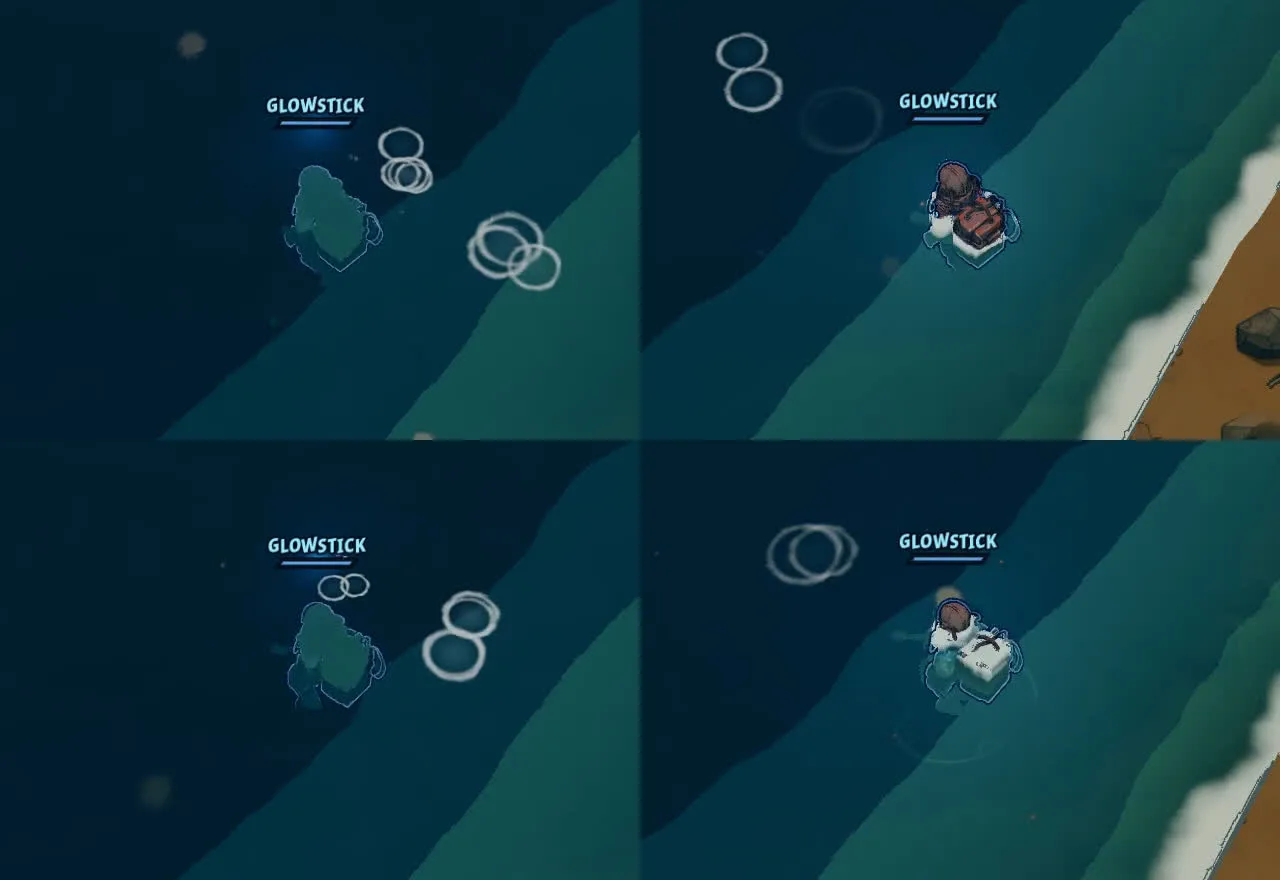
Lakes are still water. Rivers aren't. A river current pushes you downstream at somewhere between 0.5 and 2 metres per second depending on how narrow and fast that stretch is. Swimming across a slow river barely moves you. Swimming across a fast narrow one can land you a good way downstream from where you aimed, sometimes right next to something you'd rather have avoided.
What you can do in the water
This was the part we argued about the most. A survivor in the water shouldn't be as dangerous as one on dry land, but turning everything off makes the water a place where you just die slowly.
Here's where we landed:
- Guns are off. You can't hold a rifle steady and swim at the same time.
- Thrown tools are off too: grenades, molotovs and the like.
- You can't jump.
- Every class skill still works.
That last rule is the important one. The Medic can still heal, the Glowstick can still pulse and the Rigger's tricks still go off. Fights that spill into a river don't stop, they just change shape. You'll find yourself leaning on skills you normally save for emergencies.
Dashes stay on the surface of the water and carry you up to 12 metres. That's the fastest way to cover a short gap in the water, and it's saved a few of our testers from a pack waiting on the bank.
Jumping off cliffs into the sea
The new mountains have cliffs, and some of those cliffs drop straight into deep water. Landing in water takes away 75% of a fall. In practice that means a 12 metre jump into the sea is survivable, and you'll come up swimming. Anything over 20 metres still kills you, water or not.
We like this as a shortcut. If your crew is on a headland and the beacon is down on the beach, the quick way down is over the edge, as long as you check how high you are first.
One fix went in with this. Some rivers run at the bottom of deep mountain gorges, more than 10 metres below the rock on either side. Early on you could drop into those and then had no way to climb out. Those gorge rivers aren't swimmable anymore, so you won't end up stuck at the bottom of one.
The open sea, fatigue and drowning
Then there's the sea. With an ocean that now carries on past the island's edge, someone was always going to try swimming toward the horizon to see what's there. We decided the answer should be "nothing, and it will kill you".
Swim more than a kilometre away from the shore and a FATIGUE bar appears and starts filling. Turn back and it drains again. Keep going and it fills to the top, and by two kilometres out at the latest you drown.
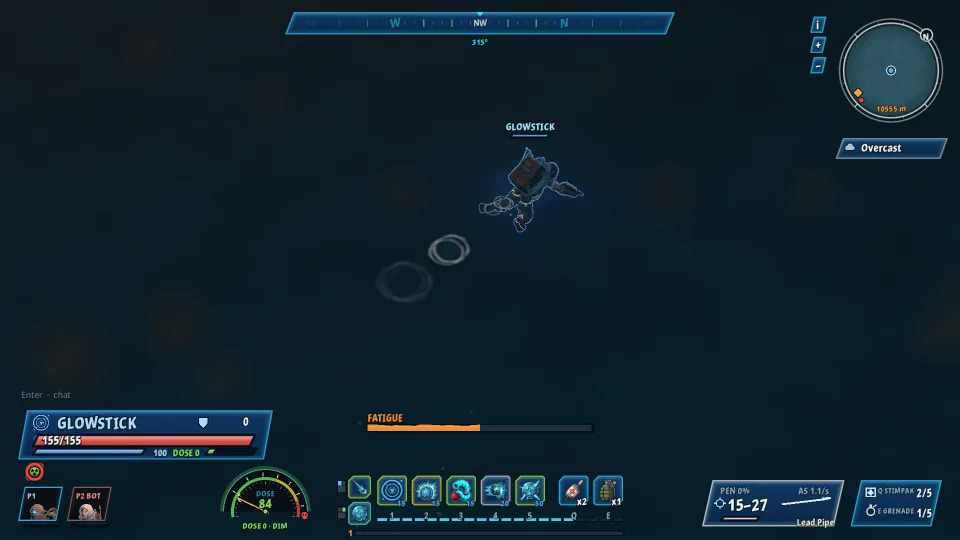
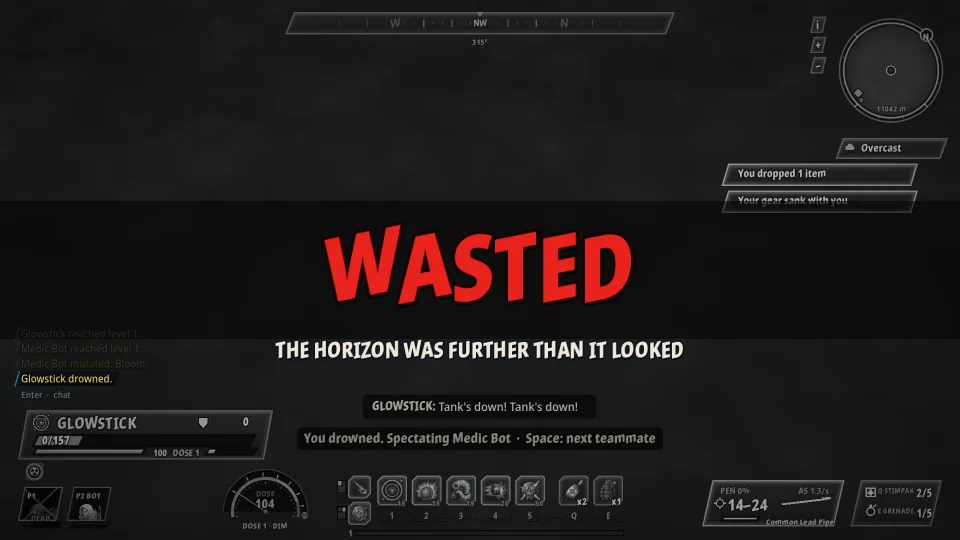
Drowning is a full death, the same as any other. You get the WASTED screen and the line "You drowned." Under the new death rules your equipped gear sinks with you and is lost, but your backpack and your stash are safe. Like any death, it also costs you 5% of the XP in your current level.
When a crewmate goes under
Drowning works in co-op too, and the crew can see it happen. A crewmate who drowns gets a line in chat ("Medic Bot drowned." in our test runs), and their body is left floating where they went down.
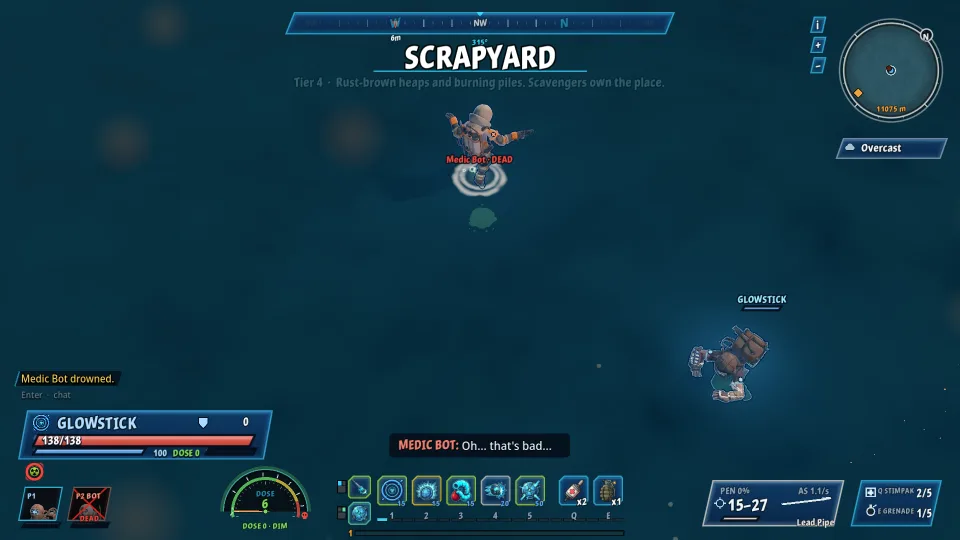
The way to avoid that is the same as everywhere else in DOSE: stay together. If one person in the crew is swimming out to an island offshore for a crate, someone should be watching the fatigue bar with them. It's rarely worth it, but the crates out there don't know that.
Why water had to be dangerous
We went back and forth on this. A version of swimming where nothing can hurt you in the water is easy to build, and it would have turned every lake into a safe room. You'd jump in, wait for the pack on the bank to lose interest, and climb out somewhere else.
We didn't want that. DOSE is a game about pressure: the dose meter, the storm, the beacon you have to reach. Water should be another place where you make a trade. So swimming is slower than walking, your guns stop working, the current has its own ideas and the open sea will kill you if you push it. In exchange, water gets you across gaps you couldn't cross before, lets you drop off a cliff in seconds, and keeps most melee monsters off your back for a while.
A few tips from our test runs
Our testers have spent a lot of the week in the water. Here's what they'd tell you:
- Cross rivers where they're wide. Wide stretches are slower, so the current won't carry you as far.
- If your build leans on guns, don't start a fight in the water. Get out first, then turn around.
- A dash from the water is a good escape from a pack waiting on the bank. Twelve metres is often enough to reach the other side of a narrow channel.
- Before swimming out to anything offshore, find a summit lookout and check the map. It's easier to judge the distance from up there.
- If the FATIGUE bar shows up, turn around straight away. It drains as you head back, and there's no prize for finding out exactly where two kilometres is.
Still to come
Swimming is in the build and works in all five languages the game supports, but it's new and we're still tuning it. Half walking speed might be too slow on the biggest lakes. The current in the fastest rivers might be a little too strong. The kilometre before the fatigue bar shows up might need to be shorter on small islands. The screenshots in this post also come mostly from our night and blizzard test maps, and we owe you some daytime ones.
If you want to try swimming yourself, the playtests are where it shows up first. Sign up in the box at the bottom of this page, and tell us on Discord how far out you made it before the fatigue bar caught up with you. Next in this series: settlements, the towns where survivors actually live.
- #swimming
- #water
- #co-op
- #death