Settlements in DOSE: towns that live, talk and fight back
Every island now has a walled town and a few camps full of people with jobs, beds and opinions. You can talk to them, trade with them and defend them when the raiders come.
The wasteland in DOSE has always had people in it, at least on paper. There were raider camps to clear and the odd survivor in the lore, but nobody you could actually stop and talk to. The world felt empty in a way that didn't fit a game about hanging on after the end.
This week that changed. Every island now has one walled settlement and two to five smaller camps, and they're full of people who live there. This post is about who those people are, what they do all day, how talking to them works, and what happens when the raiders come. It's the fourth of our dev-log posts this week, after the island, the coasts and swimming.
A quick note before we start: the townsfolk, talking, trading and raids are all in the build. The towns themselves, meaning the walls, gates, towers, houses you can walk into, the church, the pub and the farms, are the part we're finishing right now. Some of the screenshots here come from that work-in-progress town.
Why we put people in the wasteland
For a long time the only humans you met in DOSE were trying to kill you. That made sense for a game about surviving, but it left a gap. The world had no one to protect, no one to trade with and no one who could tell you what happened here, apart from item text and loading screens.
Settlements fill that gap. They give a run somewhere to head for that isn't a fight: a place to sell what you don't need, pick up a rumour about a lair, or stand for a minute somewhere the dose isn't climbing. They also give the wasteland stakes. When raiders hit a town, the people you walked past ten minutes ago are the ones on the walls.
A day in town
A settlement has around 120 people living in it. A camp has fifteen to thirty. Each of them has a bed and a household, and each of them has a day.
Settlements run on a 24-hour clock, where one hour in the game is one minute in real life. Farmers head out to the fields in the morning and work the rows. Guards keep the walls, some on day shifts and some on nights. Cooks cook, the blacksmith works the forge, the priest keeps the church and the teacher keeps the kids in line, or tries to.
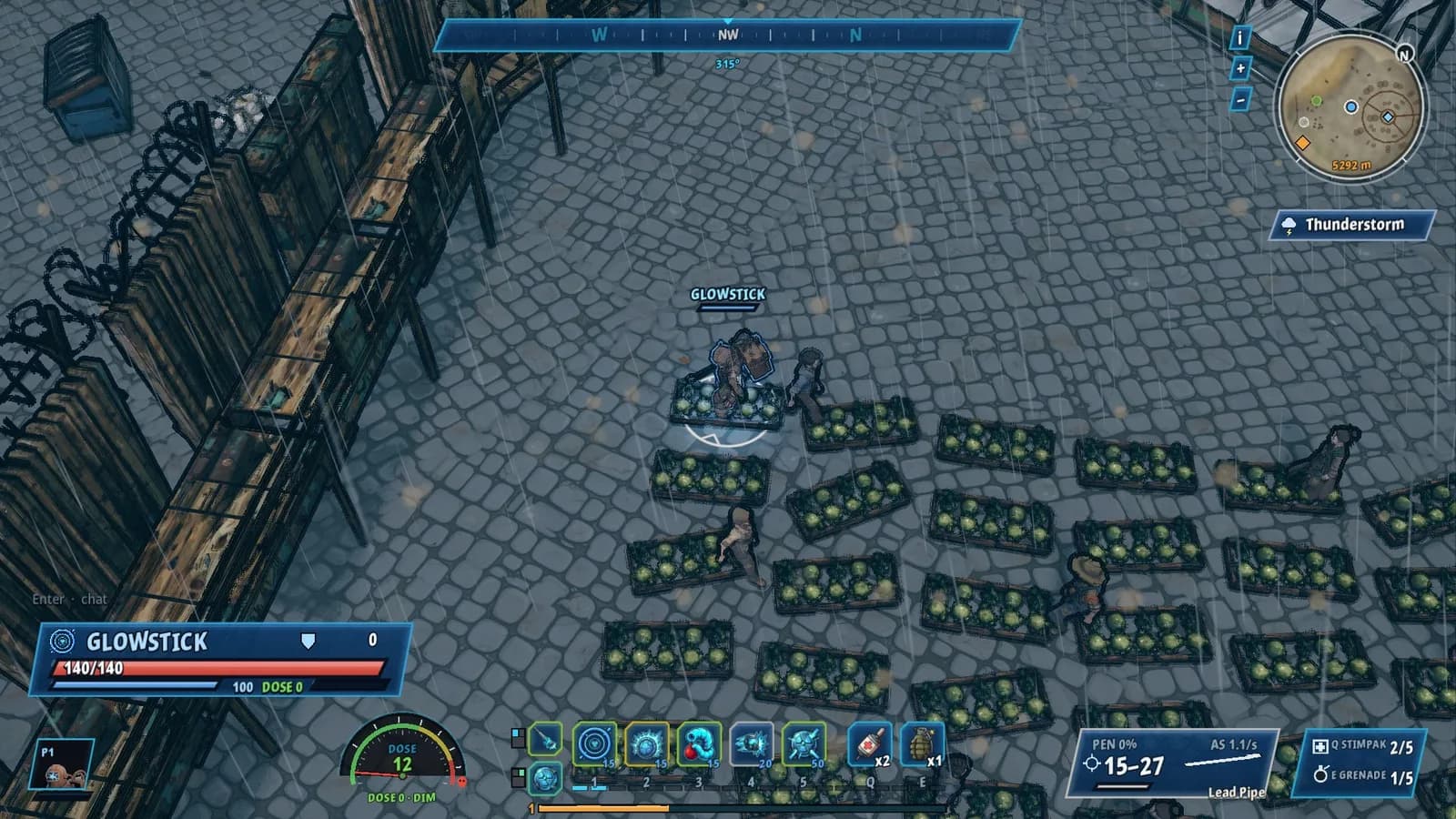
The kids are our favourite part. They play chase and ball in the square, shout at each other, and get called home when it starts getting dark. At night the pub fills up, the old folks sit out by the doors, and the town gets louder for a bit before it goes quiet.
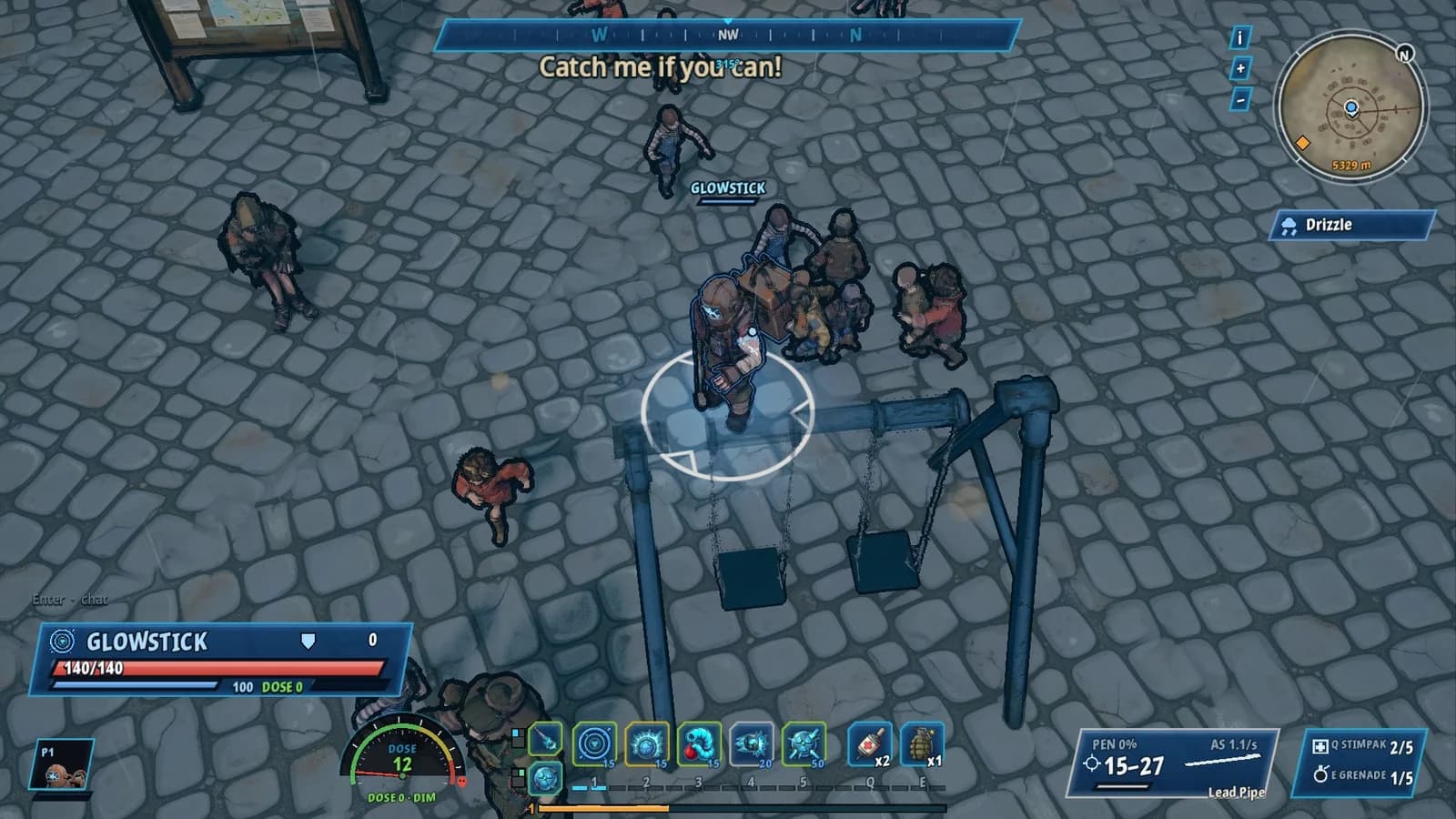
We wanted a town to feel like a mix of people, not a crowd of copies. So there are elders, beggars and townsfolk with disabilities: people on crutches, people pushing their own wheelchairs, someone knitting outside their door. Each of them got their own animations. All of it is backed by 185 voiced lines that townsfolk say as you walk past, so a busy street sounds busy.
Outside the walls you'll also meet roaming survivors. They run from monsters and shout for help when something's after them. Save one and you get 80 XP. Walk them all the way to a town gate and you get another 40.
Talking to people
Walk up to someone and press T (X on a gamepad) to talk. A dialogue box opens with a painted portrait of the person you're talking to, and their lines type out and are fully voiced.
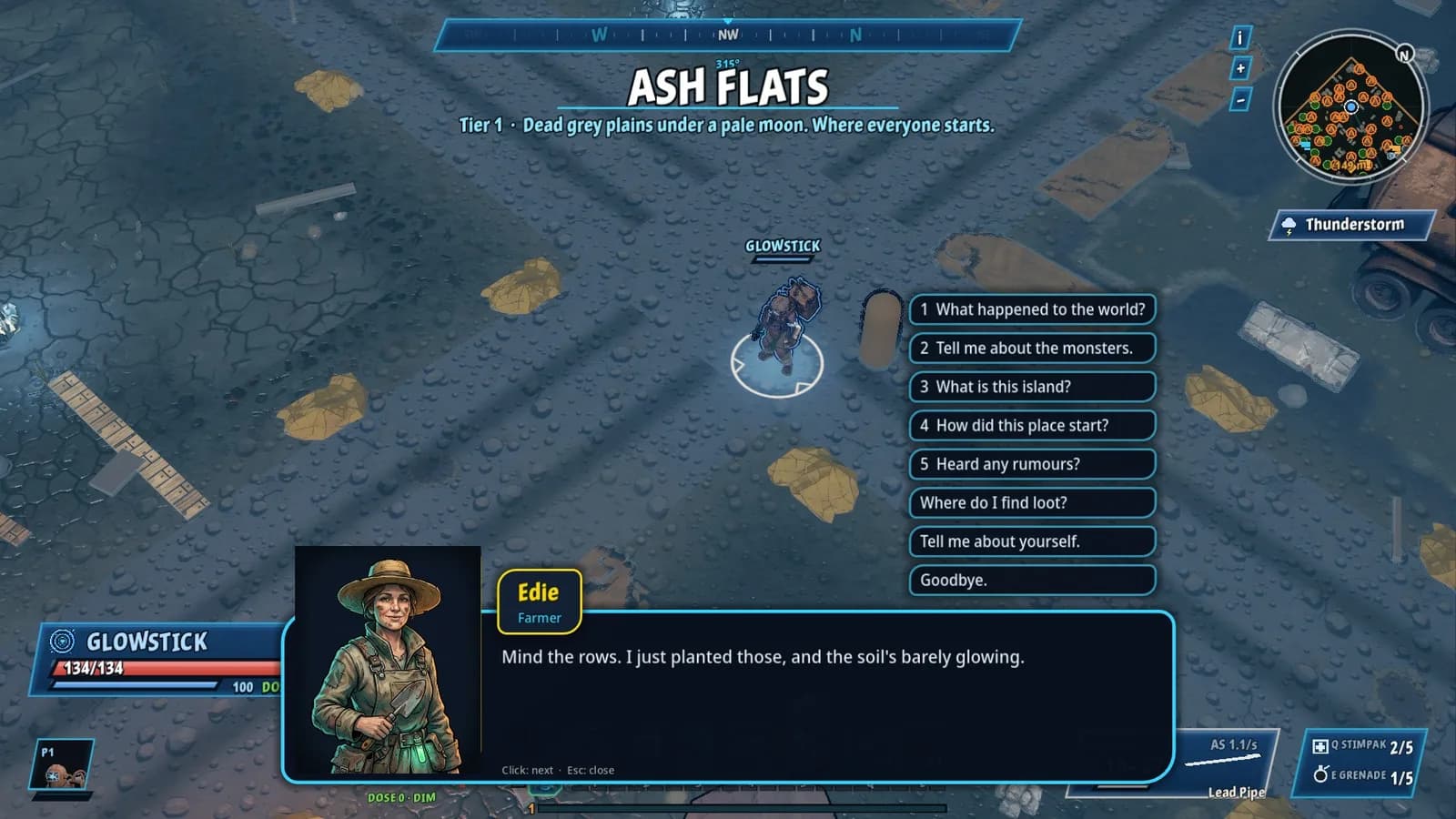
You can ask about the world: what happened, what's out there, what this island is, how the town got started, rumours, where to find loot, and about the person themselves. Different people give different answers. A farmer and a guard have very different ideas about where the danger is.
It's worth asking. Townsfolk know their part of the island, so a question about loot or rumours can point you at a lair or a cache you'd otherwise have walked past. And if you'd rather just get on with the run, you don't have to talk to anyone at all. Nothing in a settlement is locked behind a conversation.
This was a big piece of work. There are 175 lines of dialogue, written and recorded in all five of the game's languages, which came to 2,950 voice takes. We also painted 48 portraits so the people you talk to look like themselves. If you're playing in Korean or Russian, the townsfolk talk to you in Korean or Russian.
The trader
Every settlement has a trader. Their stock holds up to ten items, it restocks every 30 minutes of run time, and each restock has a 5% chance of turning up a legendary. You pay in caps, and you can sell from your backpack to get rid of the junk you've been carrying around.
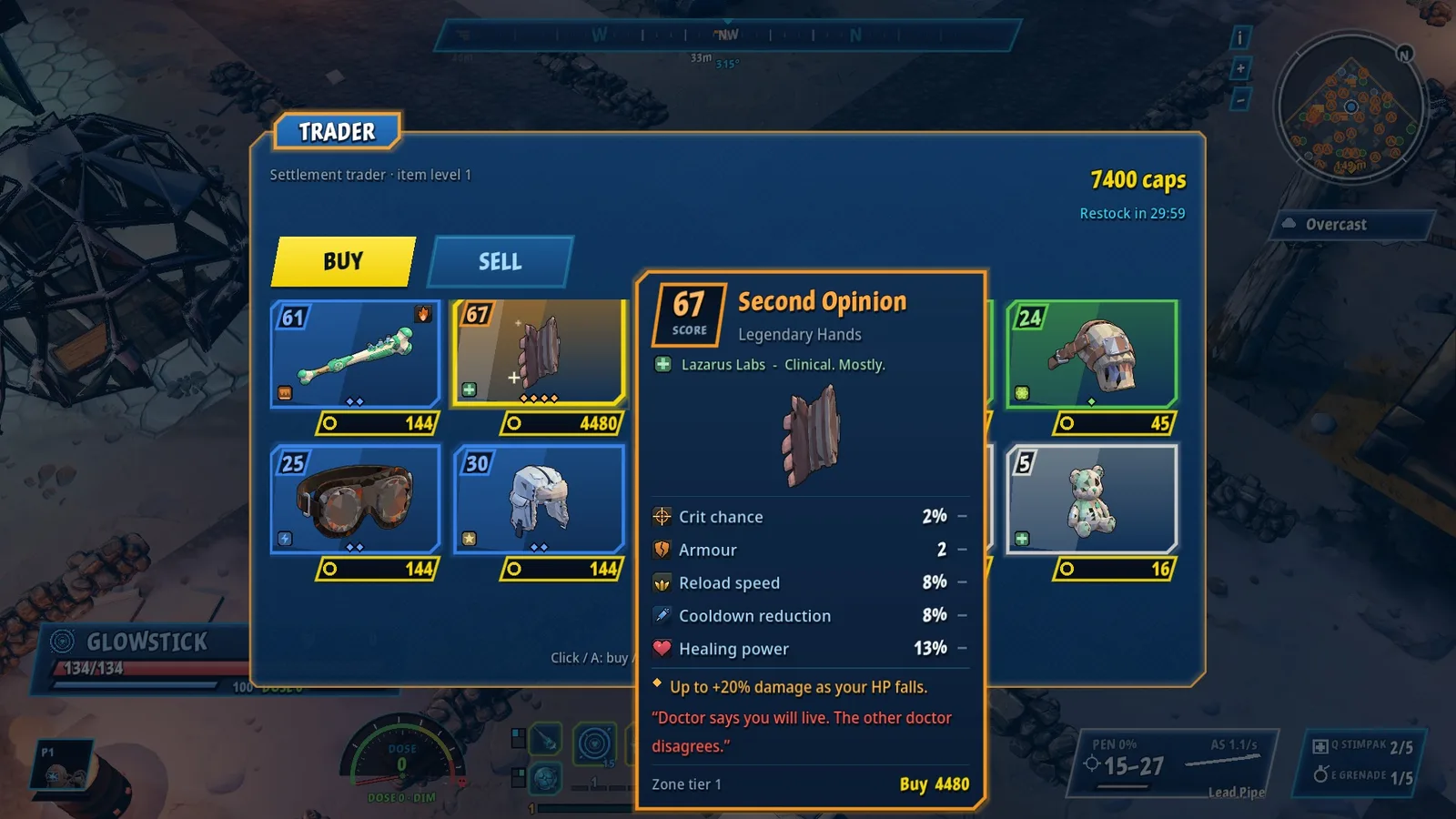
That restock timer changes how a run goes. It's often worth swinging past a town on the way to somewhere else just to see what's new, and if a legendary does turn up you'll want the caps ready.
When the raiders come
Towns are safe, mostly. Raids don't happen in the first eight minutes of a run, so you'll always get a chance to look around first. After that they can come at any time, and they're more likely at night.
You'll know when one is coming. The church bell starts ringing and the searchlights on the walls swing out toward the dark. The guards go to the walls, and townsfolk who own a weapon pick it up and join them. They fight with guns and blades, never with skills. That part is your job. Everyone else hides indoors until it's over.
People die in raids, and the town notices. The dead are mourned and their beds stay empty. A newcomer turns up roughly every seven minutes to fill the gaps, but a town that keeps losing raids gets quieter.
Helping out pays off. Defenders get XP and caps, and the trader gives you 15% off for fifteen minutes after you help hold the walls.
Camps and towns in a run
Most of this post is about the walled settlement, but the camps matter too. They're smaller, with fifteen to thirty people, and they're spread across the island where the big town isn't. A camp is the place you're more likely to stumble on halfway through a run, especially out in the wilder parts of the map.
In practice the two work together. The settlement is the hub you plan around, with the trader, the church bell and the most people to talk to. The camps are the stops along the way, where you'll find the odd survivor who needs walking home and a few more voices to ask about the road ahead.
What's next for the towns
The next big step is landing the towns themselves: the walls and gates, the towers, houses with interiors, the church, the pub and the farms. Once that's in, the raids get their proper battlefield and the kids get their proper square.
After that we want to give each settlement more of its own character, so two towns on the same island don't feel like the same town twice. We're also still balancing how often raids come and how hard they hit.
If you want to walk around a town before we're done with it, sign up for a playtest invite in the box at the bottom of this page. If there's a question you'd want to ask the townsfolk, tell us on Discord. We may well write it in. Last in this series: the Kunki Games Launcher, which is how you'll get the game.
- #settlements
- #npcs
- #trading
- #raids