A whole island: how the DOSE map grew mountains and snow
The wasteland stopped being a set of regions and became an island: 10 km across, with mountain ranges, meltwater rivers, snow on every roof and a lookout on every summit.
For most of this year the DOSE world was a set of regions stitched together: the Ash Flats, the Fungal Forest, the Frozen Ruins and the rest, each with its own look, laid out next to each other. It worked, but it never felt like a place. You couldn't stand somewhere high and see where you'd been, and the edges of the map were walls you weren't supposed to look at too hard.
Over the last few days that changed. The world is now an island, and the island has mountains on it. This post is about how that island is made, what you'll find on the high ground, and a few smaller things that came along for the ride. It's the first of five dev-log posts about what we've been building this week. The others cover the new coasts, swimming, settlements and the launcher.
Every seed is its own island
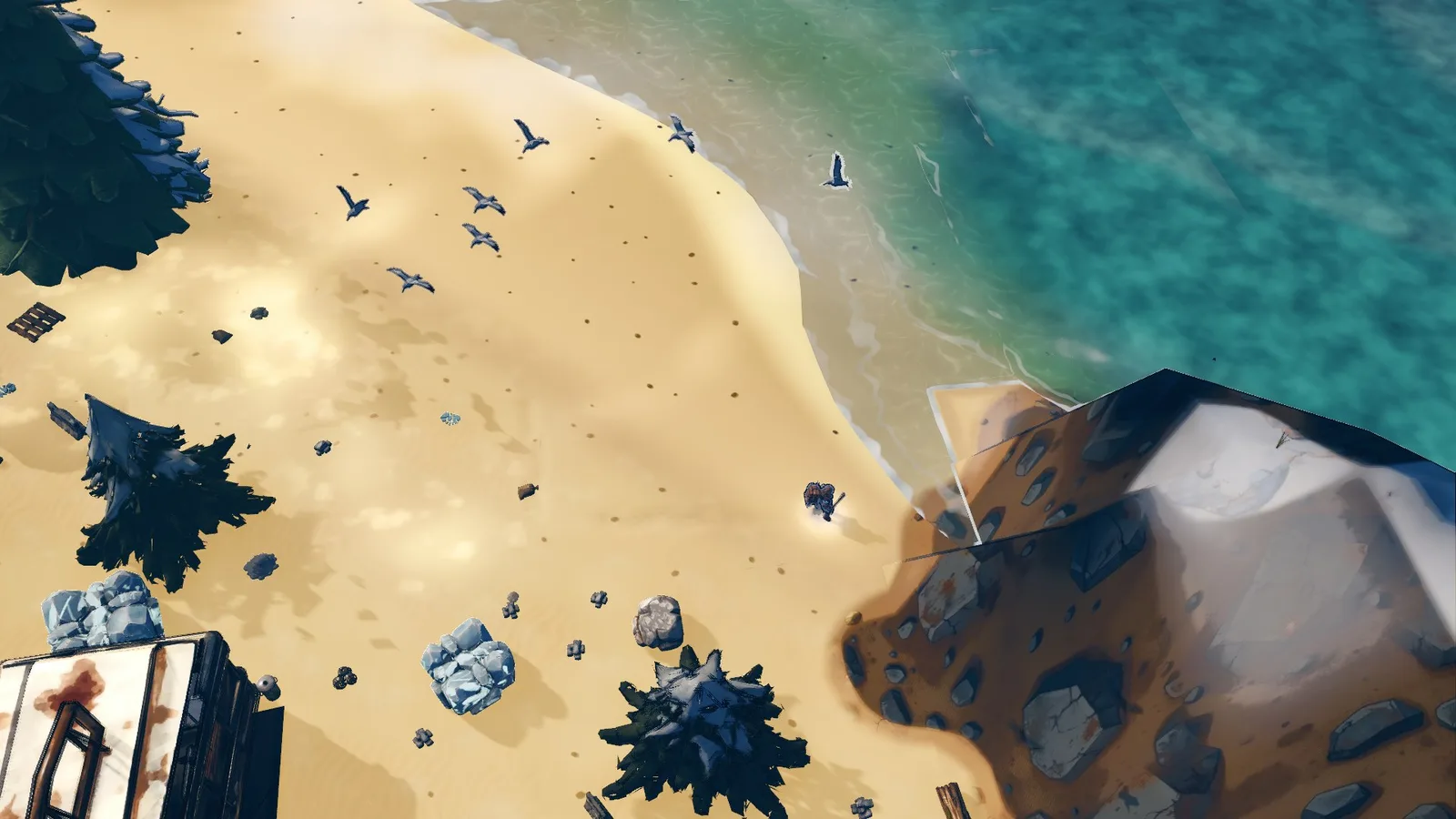
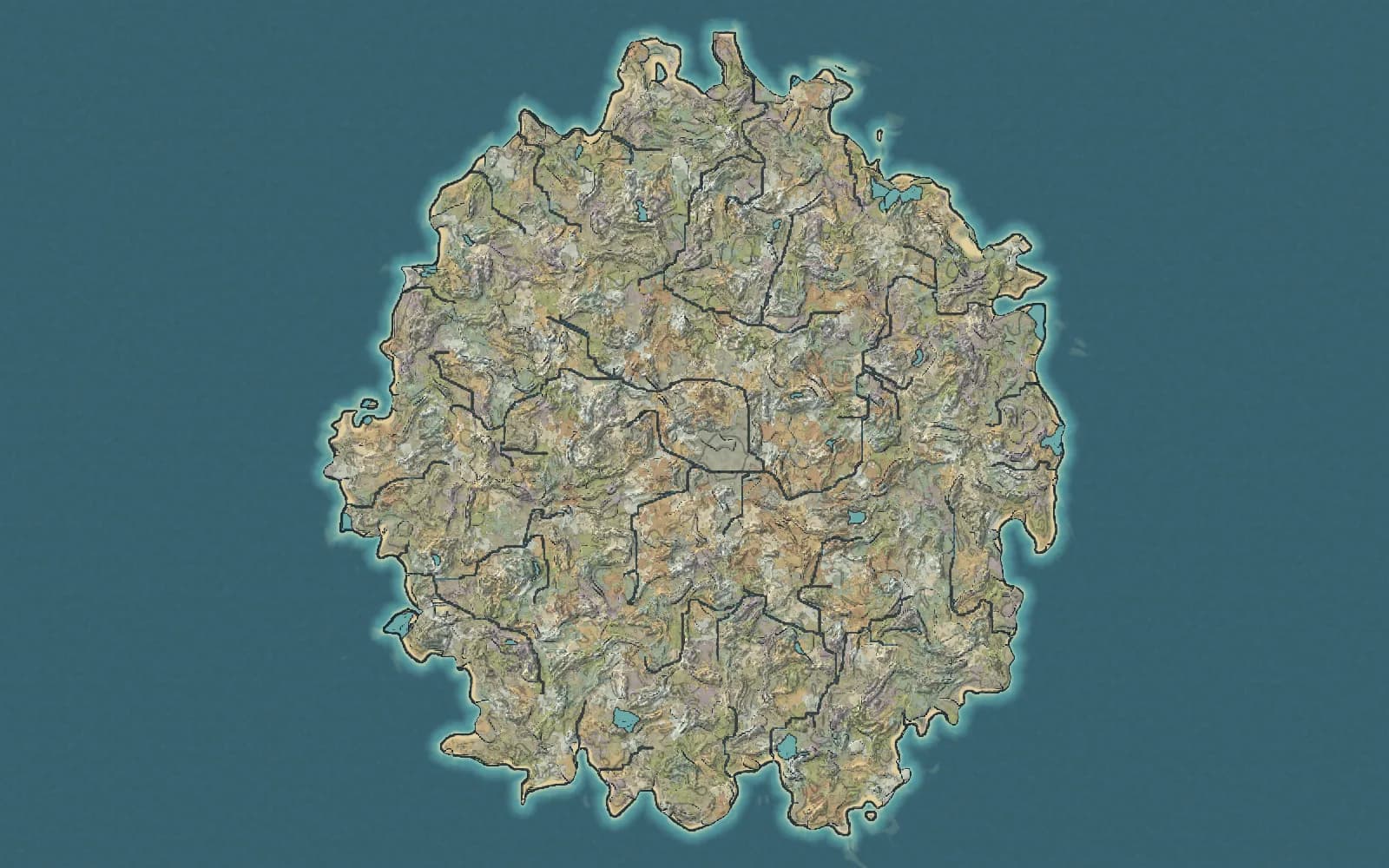
Every expedition starts from a seed, and every seed now grows its own island. It's about 10 km across, with sea all the way around it, lakes inland and rivers running down to the coast. The regions you already know are still there. They just sit on real ground now, with hills between them and water you have to cross or walk around.
We kept the rule that a run has one way out. On the island there's a single extraction point, and it's always placed at least 3 km from where your crew lands. That distance matters more than it sounds. Three kilometres in a straight line is a lot of fights, a river or two and probably a mountain in the way, so the trip to the beacon is a real part of the run instead of a short walk at the end.
Because the island comes from the seed, no two expeditions share a coastline. A crew that ran together last night still has to read the map tonight, and the old habit of sprinting down a route you've memorised doesn't work anymore. We think that's a good trade. The first few minutes of a run are now about looking around and making a plan, which is when crews talk the most.
The map changed to match. Press M and you get a hand-drawn chart of the whole island, with fog of war over everything you haven't seen yet. Early in a run it's mostly blank, which is the point. By the end your crew has drawn its own route across it.
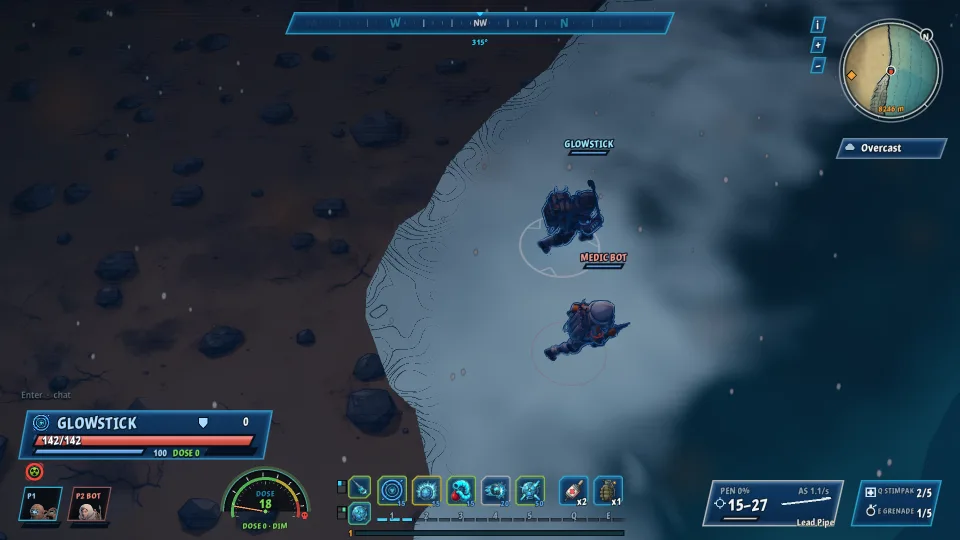
One thing we had to change with the bigger map was the dose meter. On the old maps you burned out after roughly 24 minutes of steady exposure. That was fine when the beacon was never far away, but on a 10 km island it ended runs before people saw half the map. The meter now fills half as fast, so burn-out sits closer to 48 minutes. Radiation is still the clock you're racing. The clock is just longer, because the trip is longer.
Mountains, from the forest line to the snow
Each island gets one to three mountain ranges, and the summits climb to somewhere between 2,000 and 3,500 metres. We didn't want them to be grey cones in the middle of the map, so the slopes change as you go up.
At the bottom it's ordinary forest. Higher up the trees get shorter and more twisted, then give way to alpine meadow, then loose scree, and finally snow. Each band has its own plants, rocks and ground, so you can tell roughly how high you are just by looking at your feet. The meadows were a nice surprise. In the fungal parts of the island they come out purple, with mushrooms the size of a car standing in the grass.
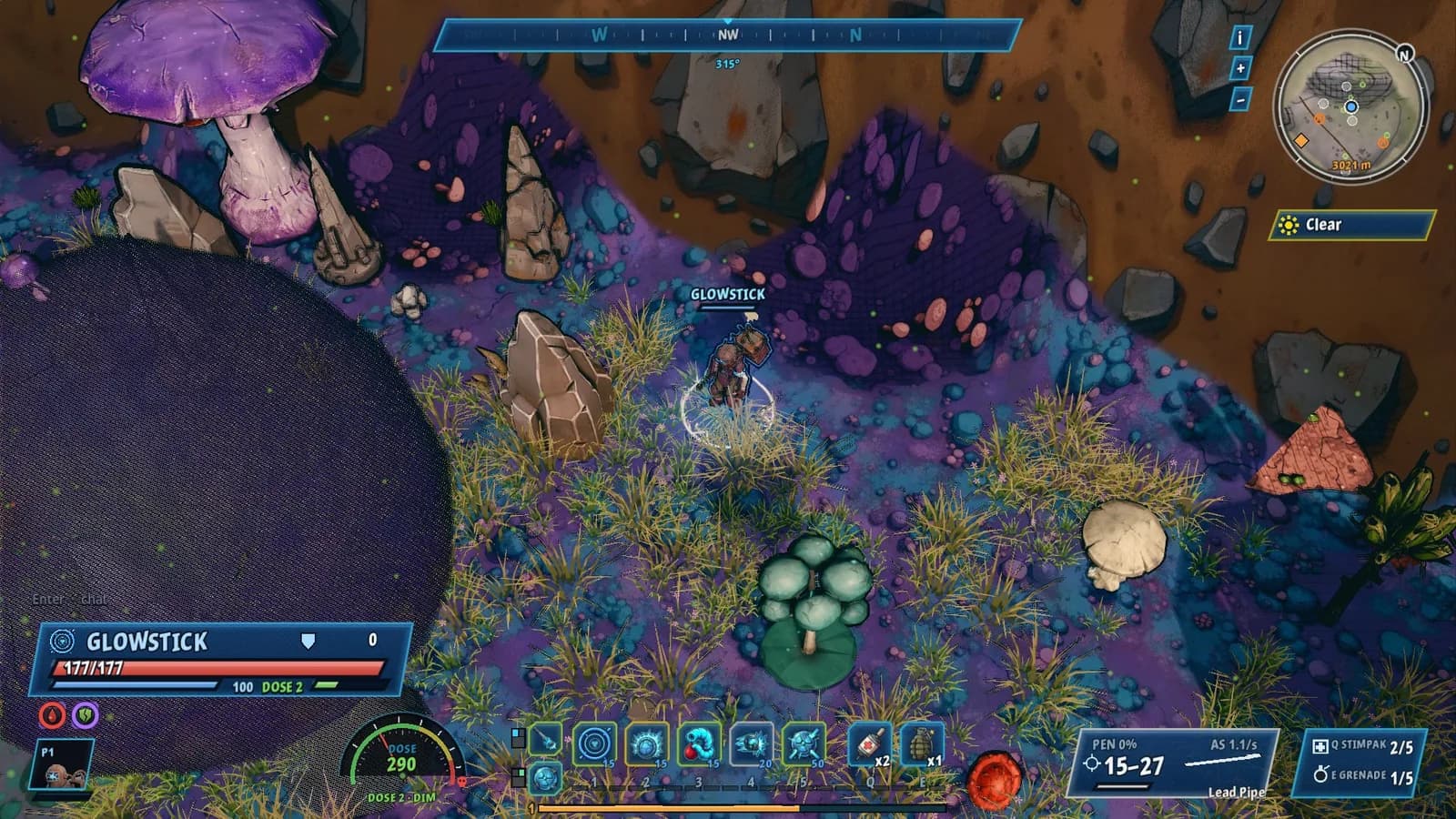
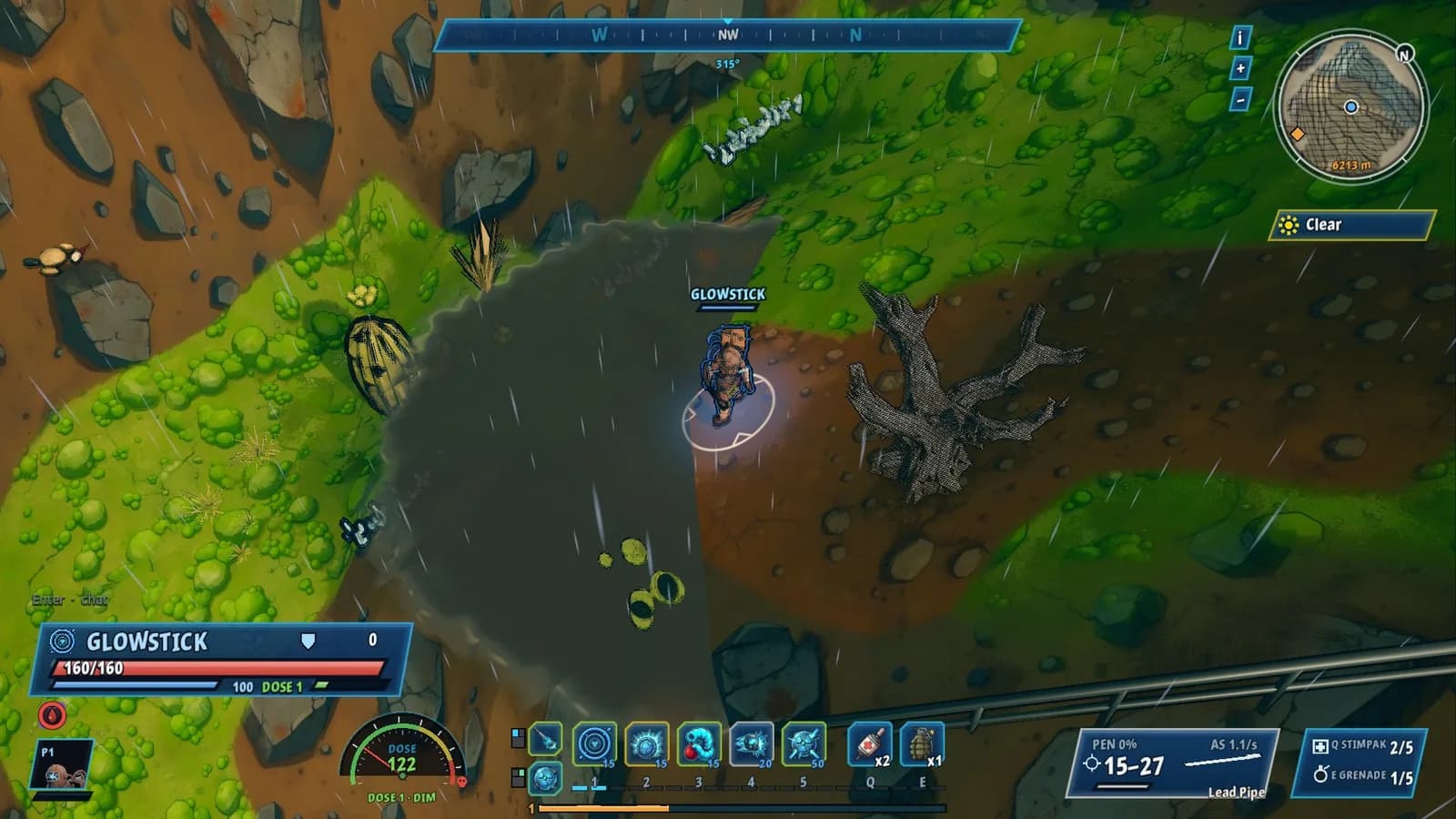
Water comes off the mountains too. Snowmelt feeds the rivers, so the big rivers on the island start high up and cut down through the slopes toward the sea. Getting up there is mostly a matter of finding a trail. Switchback paths wind up the steep parts, and on cliffs you'll find wooden walkways, bridges and ziplines that the people who used to live here strung across the gaps.
What's waiting on the summits
We wanted climbing to be worth the time it takes, so every summit has something on it.
The first is a lookout. Reach it and it reveals the map for about 2.6 km around the peak, which on an island this size is a big chunk of fog cleared in one go. It's the fastest way to find the beacon, a settlement or a lair you'd otherwise walk straight past.
The second is the way down. Most summits have ziplines that drop you a long way down the slope in a few seconds, so climbing a mountain doesn't cost you the same time again on the way back.
Then there's the loot and the danger. The high slopes hold five to eight frost camps across a range, with two or three loot crates near the top. About a third of summits have an old hut you can search, and half of them have a snow mini-boss guarding the peak. You won't know which until you get there. All of that took 34 new mountain models to build.
We like what this does to a crew's plans. A summit is a detour. It costs time and dose, and the mini-boss might be home. But the lookout and the zipline can easily save more than they cost, and the crates up there tend to be worth it.
Snow that sticks to things
The snow pass came together at the same time as the mountains. Before this, snowy areas were mostly white ground with some flakes falling. Now snow settles on things.
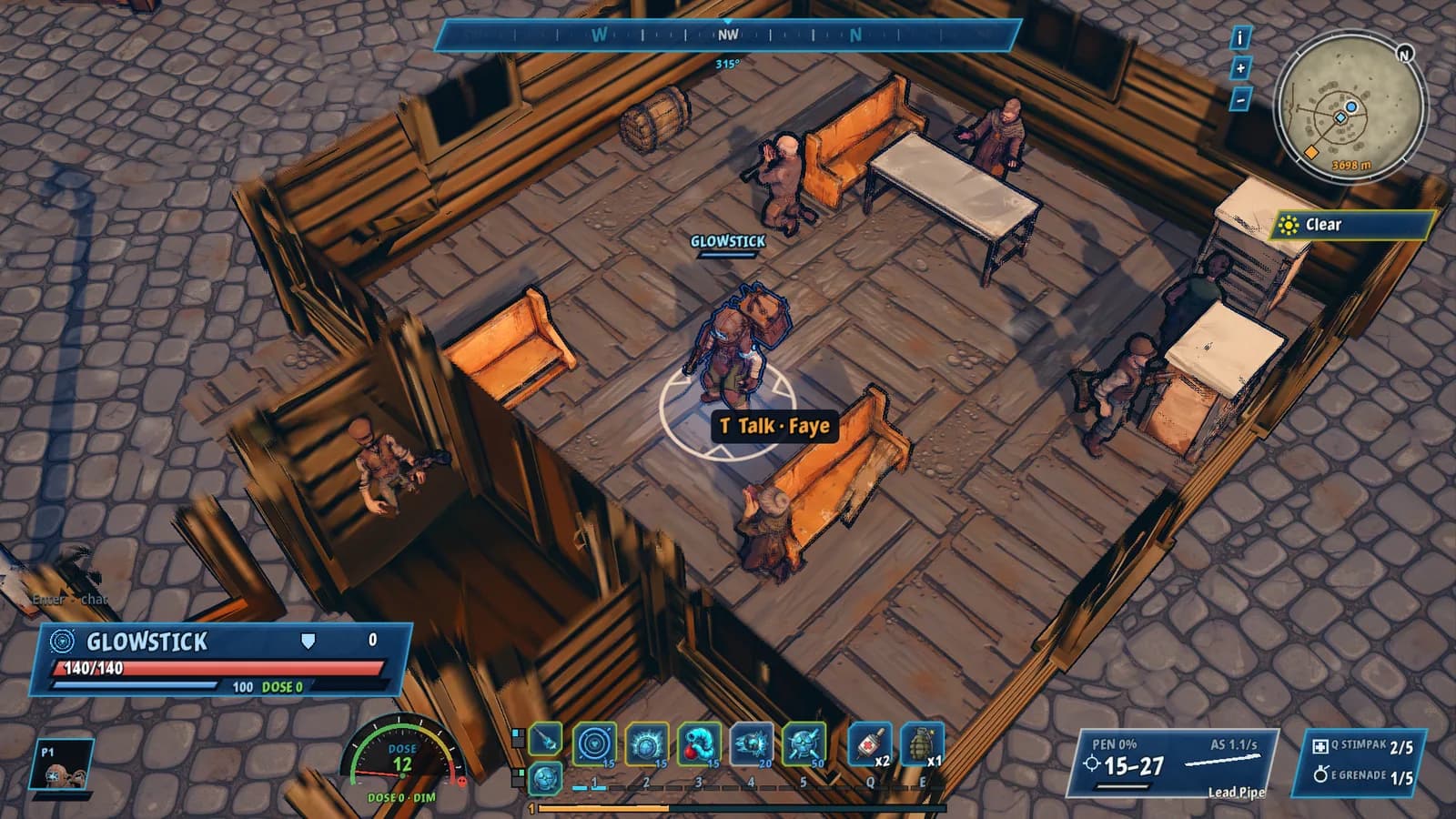
It piles up in drifts against walls and rocks. It sits on every rooftop and on the branches of every tree, so a snowed-in camp actually looks snowed in. You leave a trail of footprints as you walk, which is handy when you're trying to work out which way a crewmate went. Water in the cold parts of the island turns icy, and it looks it.
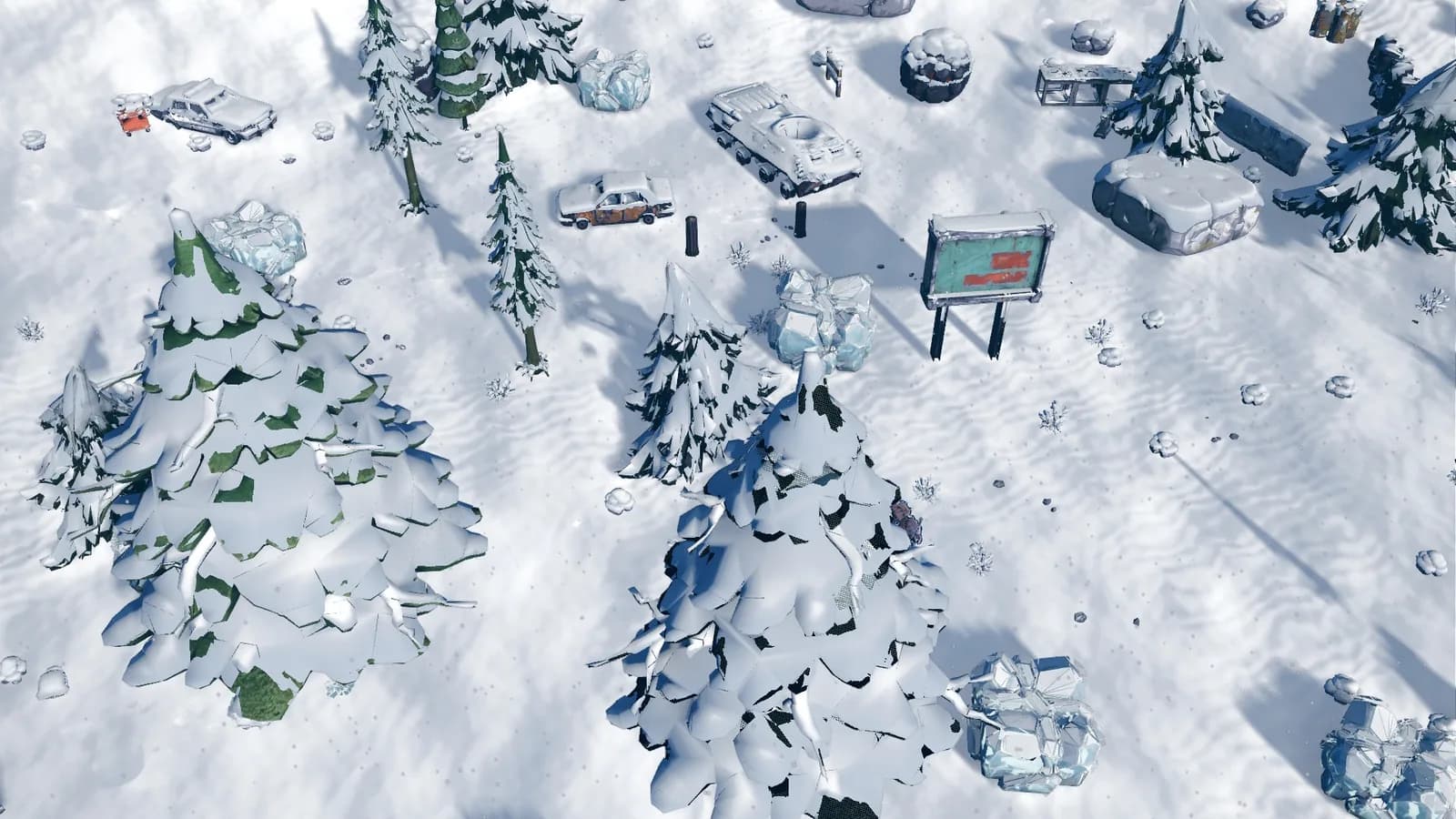
We spent a while on the small stuff here. Snow that sits on top of a lamp needs the light to still look warm underneath it. Footprints have to fade, or a busy fight turns the whole area into one grey smear. The camp at the top of this post is the result we were aiming for: cold, quiet and lived in.
Small things that came with it
A few other changes landed alongside the island, and they're worth a mention.
- You can now rotate the camera. Hold Alt and drag with the right mouse button. It helps a lot on mountains, where a slope can hide what's behind it.
- Street lights in towns and along old roads now run on almost no power. They're dim and they flicker, which suits a world that ended a while ago.
- Hero levels from 1 to 30 now carry over between runs, and each class has three talent trees to put points into. We'll do a proper post on talents soon.
- Death works differently now. Your equipped gear drops in a bag where you fall, but your backpack and your stash are never lost, and dying costs 5% of the XP in your current level.
That last one changes some of what we wrote in the extraction post. We'll update it once the rules settle.
What's next for the island
The island is in the build and playable, but it isn't finished. We're still tuning how often mountains crowd the coast, how far apart settlements sit, and how many camps a range should have before it feels busy instead of dangerous. Some seeds come out better than others, and we're collecting the bad ones so we can work out why.
If you want to see it for yourself, the playtests are where it'll show up first. Sign up for an invite in the box at the bottom of this page, and come tell us on Discord which summit you got stuck on. Next up: the coasts, where the island meets the sea.
- #world
- #island
- #mountains
- #snow