Coasts in DOSE: sand, surf, rivers and far too many seagulls
Once the world became an island, it needed a coast. Here's how the beaches, the surf, the rivers and the seagulls came together, and what we learned making water look right.
When the DOSE world turned into an island, we suddenly had a problem we'd never had before: a coastline. Kilometres of it, on every seed, and every bit of it right where players would land, fight and run for the beacon.
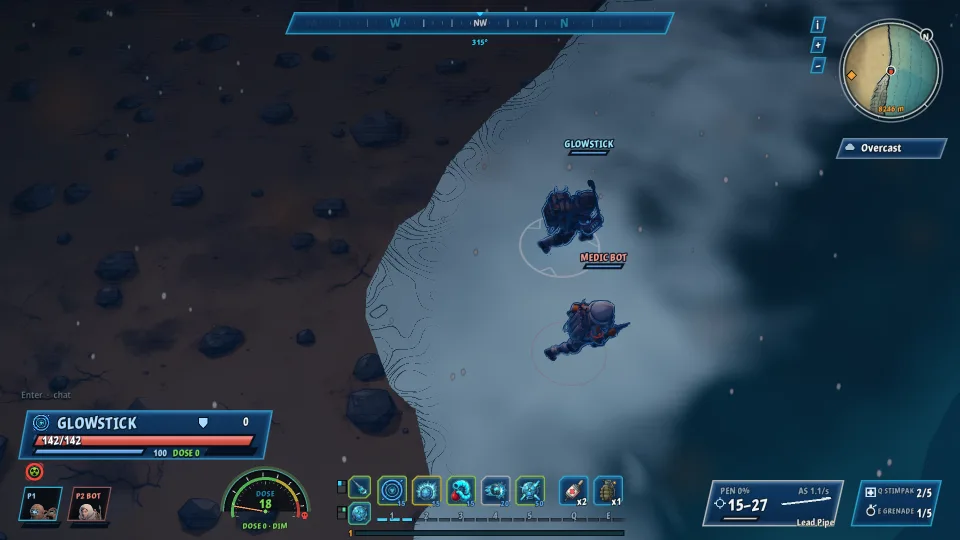
Our first attempt was honest about being a first attempt. The sea was a flat blue plane, the land was the same dirt as everywhere else, and the line between them was a hard edge. It looked like a map that had been cut out with scissors. This post is about what we did to fix that over the last few days: the sand, the surf, the rivers, the seagulls and the sound.
Sand that remembers you
The beaches start with the sand itself. We wanted it warm and yellow, the kind of sand that looks hot to stand on, because almost everything else in DOSE is rust, ash or glowing green. A sunny beach is one of the few places on the island that looks almost friendly, and we liked that contrast.
Up close the sand has soft dunes, wind ripples and scattered pebbles, so it doesn't read as one flat colour from the top-down camera. Nearer the water there's a darker wet band where the waves reach, and that band moves with the tide line instead of being painted on.
The part people notice first is the footprints. Walk across a beach and you leave a trail behind you, and so does everyone else in the crew. It sounds like a small thing, but it changes how a beach feels. After a fight on the sand you can see exactly where everyone ran, where someone circled a Brute and where the medic doubled back for a revive.
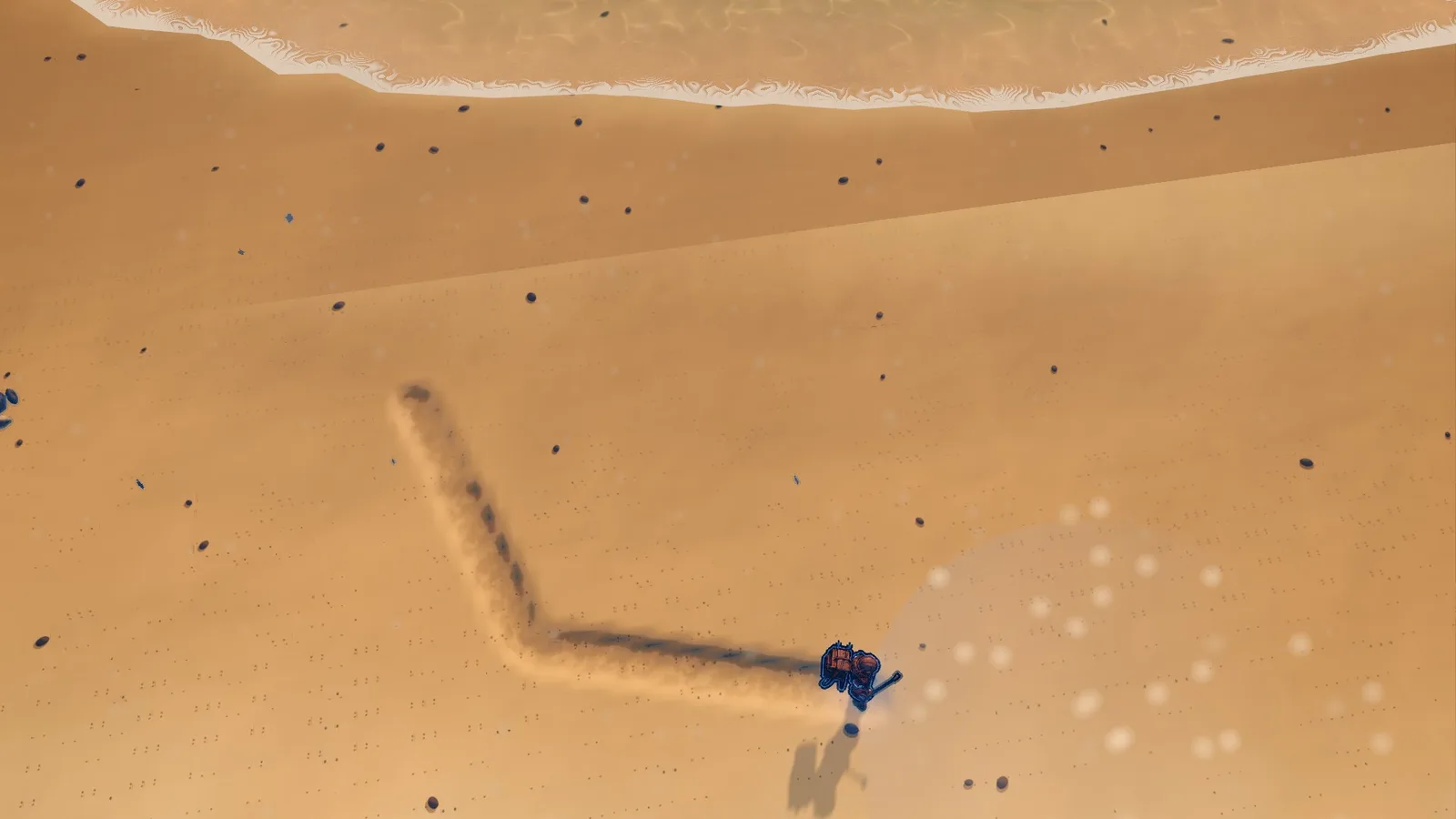
The trails fade after a while, so a busy beach doesn't turn into a mess. Getting that timing right took a few tries. Too fast and nobody noticed them. Too slow and an hour-long expedition left the coast looking like a car park.
Surf, shallows and an endless sea
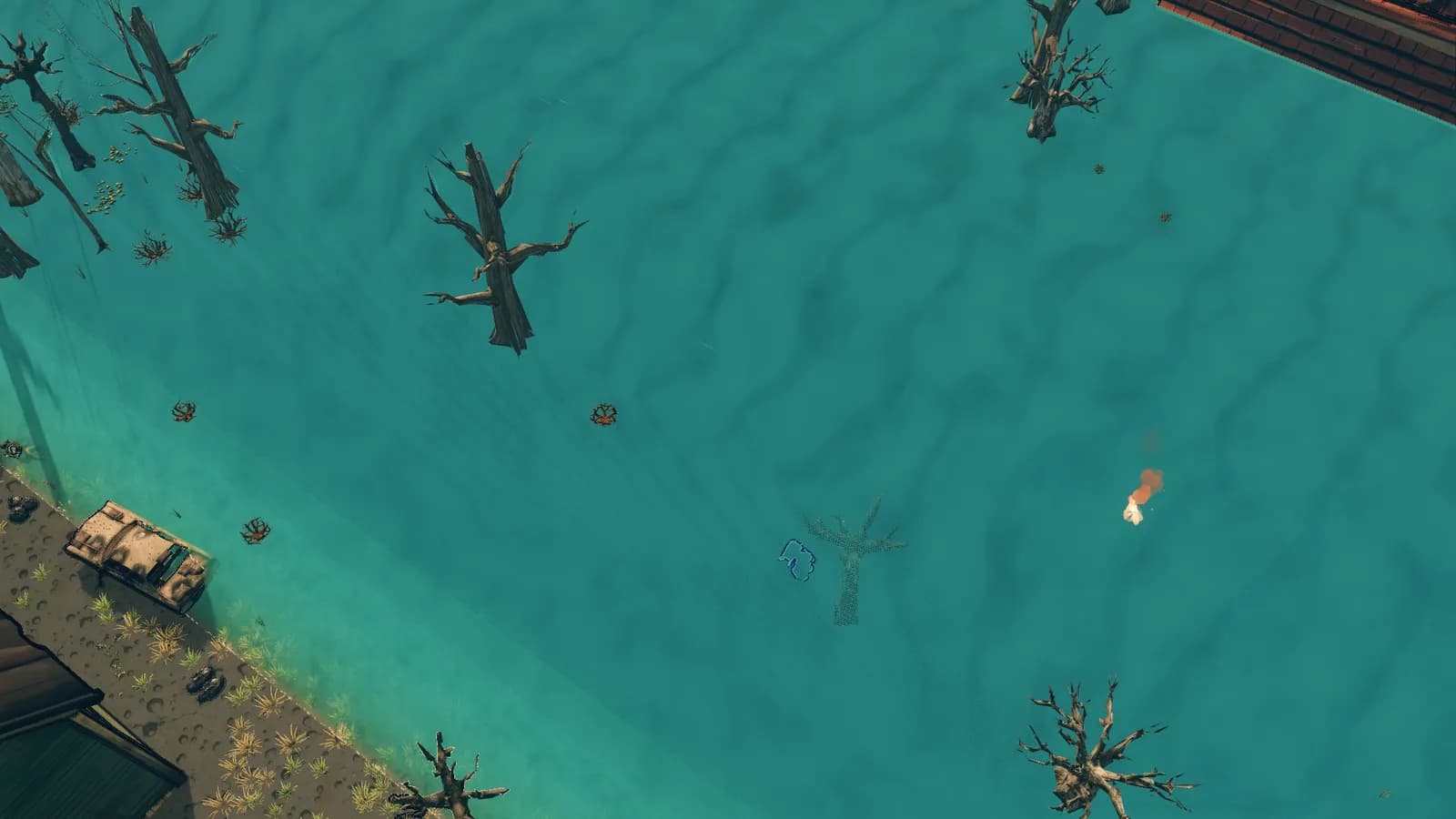
Water was the harder part. The look we were after was clear turquoise shallows that get darker as the bottom drops away, with light rippling across the sand underneath. That rippling light is what sells it. Without it the water looks like coloured glass sitting on the beach.
The edge of the water moves too. The shore wash slides up the sand and drains back, and a line of foam rides in with it. Standing still on a beach and watching it is oddly calming for a game about radiation poisoning.
Then there's the horizon. On the first island the sea stopped a short way past the coast, and if you looked toward the edge of the map you could see where it ended. Now the ocean carries on past the island's edge as far as the camera can see. You can't sail anywhere, and as the swimming post explains, trying to swim off the map is a bad idea. But the island finally sits in a sea instead of floating in a void.
Lakes and rivers that flow
Inland water uses the same look as the sea, so lakes and rivers have the same clear shallows, foam at the edges and light on the bottom. Lake shores get their own sand, so you'll find small warm beaches in the middle of the island too.
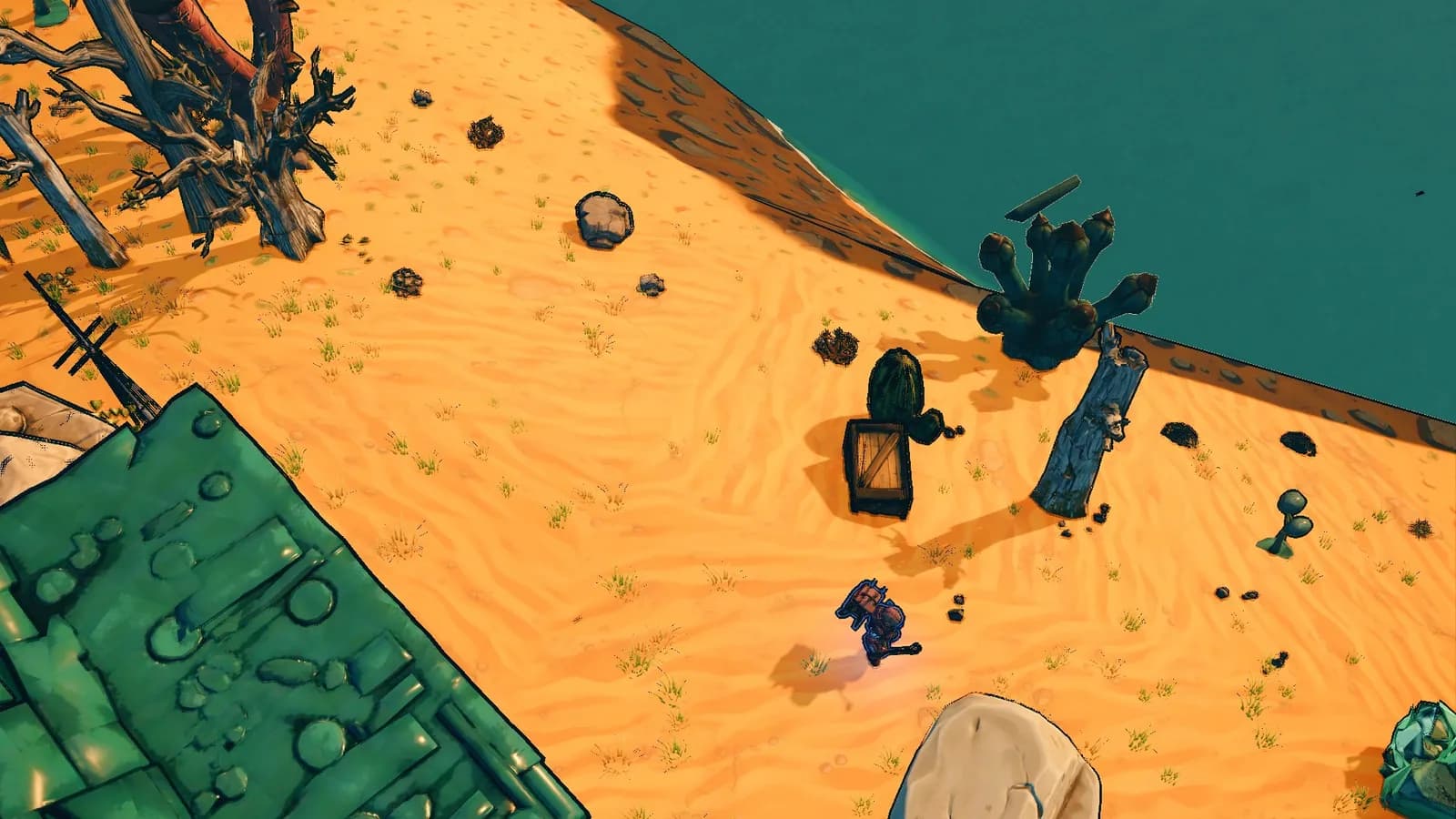
Rivers needed one more thing: they had to look like they were going somewhere. Water on a river now flows downstream, and you can see it. The surface moves faster where the river gets narrow and slows down where it widens out, and it swirls at the bends. On the island, the big rivers start as meltwater up in the mountains, so following one downhill is a decent way to find the coast if you're lost.
This isn't only decoration. The current is real, and it pushes swimmers along with it. That's part of the swimming work, and it means a river can carry you somewhere you didn't plan to go.
Seagulls, and why they scatter
Every coast needs gulls, and we went a bit overboard. Flocks circle over the beaches, glide on the wind, and land on rocks and on whatever junk is lying around. When you walk toward them they scatter and lift off in a noisy cloud.
They do a little more than look nice. A flock bursting into the air is something you notice from a distance, and it means something walked into them. Sometimes that's your crewmate. Sometimes it's not. We haven't tied any rules to that yet, but players in our tests already started using the gulls as an early warning, and we're happy to keep it that way.
They also call, in 3D, so you hear a flock off to one side before you see it.
What the coast sounds like
Sound is half of why a beach feels like a beach, so the coast came with a big audio pass. We added 112 new sounds in total.
- The surf gets louder as you get closer to the water and fades as you head inland, so you can hear the coast before you reach it.
- Footsteps change with the ground under you: sand, snow and shallow water all sound different.
- Walking into water splashes, and the splash depends on how deep it is.
- The wind follows how strong it actually is, from a light breeze on a calm beach to a howl on an exposed headland.
A lot of the work here was mixing, not recording. The sea has to be there without drowning out a Spitter winding up behind you, so the surf ducks under combat sounds and comes back when things go quiet.
Why the coast matters in a run
We didn't build the beaches only to look at them. A coast plays differently from the ruins and forests further inland, and we wanted that to be true.
A beach is open ground. You can see a long way, which is great for spotting a pack early and terrible when Spitters spot you first. There's nowhere to break line of sight except the odd rock or wreck, so crews that like to fight around corners have to change their habits on the sand.
The waterline is a natural edge, too. With the sea at your back you can only be attacked from one side, but you also can't back off. Our testers kept getting pinned against the surf by a pack coming down the dunes, and it's one of the better fights on the island for exactly that reason.
Rivers work as roads. They run from the mountains to the sea, so if you're lost, following one downstream gets you to the coast. And the footprints mean a crew that splits up can find each other again by reading the sand.
Testing the look at noon and at sunset
Water and sand change a lot with the light, so every version of the coast got captured twice: once at midday under a hard sun, and once at golden hour, when the low light turns the sand orange and the water darker. A beach that looks right at noon can look flat at sunset, and the reverse.
Most of the fixes in this pass came from those side-by-side captures. The wet band near the water was invisible at noon until we darkened it. The foam line looked too bright at sunset until it picked up the colour of the sky. Small things, but they add up to a beach you believe.
What we're still fixing
The coast isn't finished. There are still a few spots where a big rock outcrop meets the sand with a hard, flat edge, and you might catch one in a screenshot or two. Some headlands need more shaping so the water doesn't wrap around them in a straight line. We're also still tuning how bright the beaches are at noon, because white sand under a full sun can get a bit much.
If you'd like to see the coast before we're done with it, sign up for a playtest invite in the box at the bottom of this page. If you have opinions about seagulls, and apparently everyone does, come share them on Discord. Next up is the part that happens once you walk into that water: swimming.
- #world
- #coast
- #water
- #audio